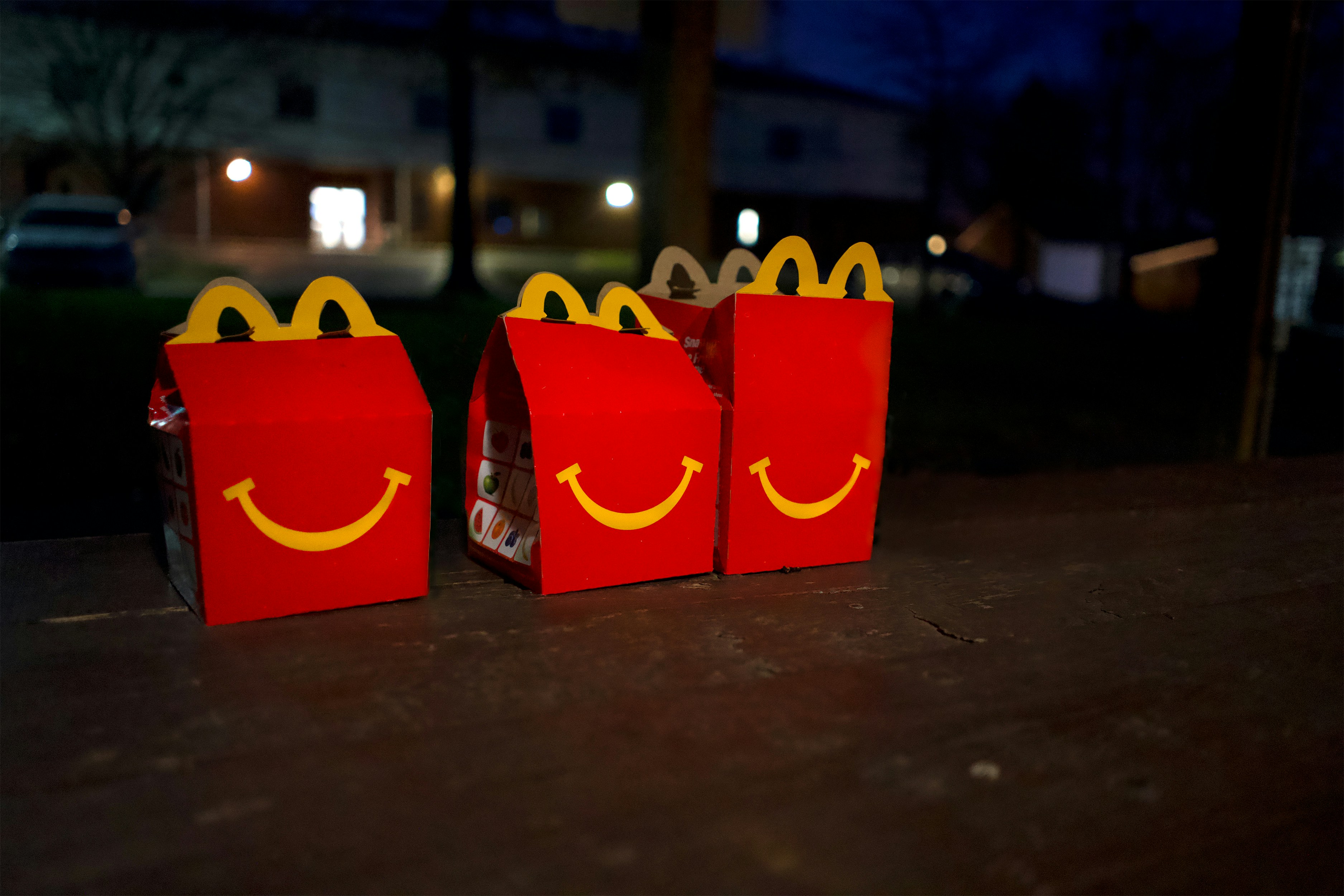
Lately, Facebook has been suggesting short clips of childhood: thirty-second videos of old happy meal toys and video games.
I remember opening the plastic bags and relishing the surprise of Wolverine in a plane with claws or of Gandalf with his light-up staff after a cheap hamburger or taco.
I remember hours spent chasing podracers, flipping on skateboards, wielding Flame of the West or Buzz Lightyear’s blaster, batarangs or Pokéballs, in my favorite digital adventures.
I remember joy, still present, appearing over time through a host of expressions, all gifts of grace from a God who is not too old for play.
Autumn arrives like an old friend, Unpacks his bags: gifts of color, cool weather, Tastes and smells welcome and Unmistakable. He takes much but gives More, whispering through death of Newness of life.

Albert Bierstadt, Looking Down Yosemite Valley, California (1865)
How can one capture living light with paint And make it move, or grasp a glimpse of time And translate it to canvas, from the faint Stone’s shadows to strong sunbeams, make it rhyme Reality? I see, and I am stopped, Struck by the detail, stilled by majesty. An artist dared create; now I am dropped Into the glory of Yosemite.
Painters and poets, like the prophets, point To truths oft hiding right before our faces. They look upon creation and anoint With holy purpose e’en the commonplaces. They see then sow the seeds of what they saw, Thus fostering in us the fruit of awe.
Albert Bierstadt, Public domain, via Wikimedia Commons
Every Friday in November’s poetry challenge was dedicated to a different poetic form, giving us an opportunity to stretch ourselves a bit. This second Form Friday poem is an Ekphrastic, where the poem is a response to a painting or some other work of art. I chose Bierstadt’s painting after seeing it on one of Russ Ramsey’s Art Wednesday posts (see here).
The prolonged night, the deepest dark, the cold, as concepts, could conjure thoughts of death, depths of longing, the chill of fear. But don’t they also accentuate the warmth of home and a good night’s sleep?
We stood alone in Holy Trinity Church and soaked in the silence. There was something special, holy even, about that quiet moment, not least of which was the fact that it was so vastly different than moments we’d shared earlier that day.
Public transportation can be tricky business. My wife and I were in London for our honeymoon, and we’d planned to get around using various forms of public transport for the week. In London, the tube system is extensive, and while it took some getting used to, we quickly began to feel comfortable using it to explore the city. Anytime we needed to get from one place to the next, I’d search the next location on Google Maps, and I’d be given directions to the nearest underground station along with the line we needed to take. The details were impressive, down to the specific platform and train needed to get us where we wanted to go. With the tube, there were designated routes, fairly consistent schedules, and clearly communicated stops so we always knew where we were and how long we had until our next stop.
Not every public transport service operates the same way, though. On Saturday, we hopped on a train to Oxford, expecting the same sort of system. To be fair, the train operated much like the tube, with set stops and a clear schedule. I couldn’t find a list of the stops, though, so when the train stopped and I saw Oxford Park on the sign outside, I led us off the train, thinking we’d arrived a bit early. Seeing no sign of the city, we walked into the station and were kindly told that we’d gotten off one stop too early and would need to take the next train into the city proper. This mistake cost us about 30 minutes and led me to panic at the strain on our schedule, but we eventually got to Oxford.
Then came breakfast. We’d planned to eat and wander around a bit before our first tour of the day. After losing 30 minutes from the train mistake, we felt more urgency to find a quick meal, which was heightened by the fact that the restaurant we’d chosen took longer to find than expected. But we ate and finished with a few minutes to spare, giving us just enough margin to get to the location of our tour and struggle to find the entrance. We eventually got there, but only barely.
At this point, we felt a bit frazzled, as we’d arrived late or nearly late to every event we’d planned so far. When it came time to leave for our next tour, we managed to find our bus stop easily enough, and after some confusion about how to get a ticket, we were on board and on our way.
I was quite excited at this point. Our next tour was of C. S. Lewis’s house. Lewis has been a major influence on my life and writing, and I was so looking forward to visiting the house where he lived and worked along with the church where he worshipped and was buried. But I was also nervous, as I couldn’t get my maps app to show me the route for the bus we were on. We’d told the driver where we were going and were sold tickets, so we felt confident that we’d be dropped off at the right place. I was hopeful that things would go smoothly. Then I noticed that none of the stops we were passing looked familiar, and our GPS dot on the map began to leave the town and head further and further into the country. We began to panic. By the time we realized we’d missed our stop and would need to get off, the bus had entered a highway with no stop in site. What’s more, we couldn’t figure out how to stop the bus short of actually talking to the driver.
When we finally stepped off the bus, we were far from where we were supposed to be with the tour starting shortly. We hopped on a bus going back the way we’d come and missed our stop a second time because we still couldn’t figure out how to signal for a stop. Thankfully, we caught the next stop after the bus driver pointed to a button in front of us that we’d both missed. We exited, flustered and stressed and a bit embarrassed, and walked quickly through a light mist, knowing we were over 20 minutes late but hoping to be let in.
As we arrived at the Kilns, though, we were soon calmed. Despite being so late, we were welcomed in and told we could join the tour in progress. We caught up with the group as they were moving into their next room, and we felt something that had been absent all week: community. Sure, we’d been surrounded by people everywhere we went, and we’d just toured the Bodleian Libraries with a small group. But here, something was different. Rather than just meeting friendly faces, we were met with hospitality. We walked past a bowl of cough drops with a sign to please take one (a welcome gift after a long walk through the cold, damp air). Our guide, Esther, asked us where we were from and helped to settle us after we joined the group late. The stories she told of Jack, Warnie, and those who frequented the house felt more like family memories than mere history. After the tour, she spent a few extra minutes with us in the sitting room to catch us up on what we’d missed, going above and beyond in kindness and generosity. We felt a warmth there we didn’t realize we were missing, in part because for the first time on our trip, we knew we were around other believers. We felt at home there in a way we hadn’t elsewhere in England, and that made all the difference in our day. We entered the house flustered, cold, and discouraged. We left humbled and encouraged and thankful.
After the tour ended, we took a short walk to Holy Trinity Church, where Lewis is buried. To get there, you have to walk through the neighborhood, past quaint houses and narrow lanes, until you reach a gate opening to trees. The church isn’t large at all, and the churchyard isn’t flashy or pronounced. It’s simply there, as it’s been for years, quietly tucked away in this corner of the world. After finding Lewis’s grave, we entered the church itself, where a few others who’d toured the Kilns with us were just leaving. Then we were alone in the old church building.
There in the quiet, after the craziness of the day, we both enjoyed a moment of peace. And there was a sense of rest in that stillness as well. I wonder if that moment would have been as special if it wasn’t for the stress that had preceded it. Similarly, I wonder if the tour, and the intentionality of the hosts, would have meant as much if we hadn’t been so late.
Life is interesting. On one hand, we don’t desire setbacks or sufferings. We try to avoid them if at all possible. Yet some of God’s greatest gifts come on the heels of such experiences, sometimes even because of them. Our reason for being in Oxford in the first place is another example of this, as it was our honeymoon, a celebration of marriage following years of struggle and silence. Those years were filled with bitterness and suffering, as my wife and I were both working through some of the hardest seasons we’ve ever faced. And yet God was at work in and that time, leading us through it to each other. All things really do work together for good, as Paul wrote in Romans 8. And though we often forget it, God proves the point over and over again in our lives. That day in Oxford is a sweet reminder that God is good and that he is generous and kind even in the midst of frantic circumstances.
And in these darker days late in the year, When night falls sooner and we feel the chill Of autumn in each breeze, we start with fear But find amidst the ghosts and ghouls goodwill As families and friends come out to play And share some goodies too. Then as the air Grows dry and cold, we mourn the loss of day Yet turn to thanks, in fellowship and pray’r And much good food. And then we put up lights To fill the longest nights with hope and cheer. The season’s stories, smells, tastes, sounds, and sights Bring warmth unparalleled to end the year. It’s true, the light is lesser now, but hark! The angel’s song still sounds here in the dark!
When my thoughts were all gum on my shoe-bottoms, tripwires, and straitjackets, my decisions were all running away, confused striving, and well-intended wounds.
Too few of my steps were right, and I was left at a loss for direction.
But every misguided misstep, every freezing fear, and every burned bridge became a step toward truth, life, and love, and I see now you are sovereign over time even when I can’t tell it.
At the right time, as the Scriptures say, you did all we needed and more. But we who count days, to whom 1,000 years are not as a day, often count you late, or at least ill-timed. But the Lord is never late, nor is he early; he arrives precisely when he means to. Help us to trust you.




 as i learn to walk