In the corner spot of the bench seat, I Met with God and with great thinkers, studied Past papers and pages. Pimento toast With bacon and a cold brew, glass sweating— I keep napkins underneath to catch the Condensation—kept me fueled and focused, That and the eight-hour YouTube video Of coffee-shop sounds and soft jazz, because The real thing by itself is just a bit Distracting. After studies, or before, I open a journal and a notebook, One for prose, one for verse, and I reflect On life, its beauty, its difficulties, And on God’s great faithfulness through it all.
Lord, keep me weak if I can’t handle strength, For pride precedes destruction, and I fear Forgetfulness, the turning of the ear To people’s praises. I would run the length Of life in faithfulness, but know the length Of steadfast years is short unless my ear Inclines to you, unless a holy fear Is fixed in me, for therein lies true strength. Humility, my Lord, is my request, To know my stature and to call it blessed Whate’er my lot because I’m found in thee. And temper henceforth every request, Reminding me what truly makes men blessed: True knowledge of themselves in light of thee.
I always heard birds traveled south in winter But never noticed diff’rent birds around. Perhaps I might detect signs of migration If I was not so focused on the ground.
Like Martha, many things make me anxious, take my mind down the most unproductive roads, make time my enemy. But those things, they require perspective. Take a breath, and don’t forget peace conquers worry.
Every Friday in November’s poetry challenge was dedicated to a different poetic form, giving us an opportunity to stretch ourselves a bit. The first form was the “Golden Shovel,” from Terrance Hayes. For this form, you take a line from a poem you admire. You then use those words, in order, as the end words for each line of your own poem, crediting the author of the original lines in your own work. For more on this form, and to find links to Hayes’ golden shovel and to the poem that inspired his, see here.
Make me the man that you want me to be E’en if I do not want to be that man. Teach me to trust you when I cannot see The purpose in the details of your plan. Help me to hope when tempted to despair At circumstances greater than my strength, To trust that, in the darkness, you are there With love beyond all height, depth, width, and length. Show me myself, and make me truly know The greatness of my need and of your grace. Remind me you are with me as I go, And lead according to your path and pace. Lord, search me, try me, know me, make me new. Let all my life be lived in love of you.
Fear sometimes settles on you like a fog. You feel it all around you, it’s presence chilling and uncomfortable. It obscures your sight, preventing you from seeing the way forward. You know the world around you still exists, that reality is bigger than what you can presently perceive. You know that the fog will eventually lift.
But sometimes it doesn’t.
Or, at least, it doesn’t lift as soon as you’d like. That’s when you start to panic and despair.
It sounds silly, but fear can make you suddenly less certain of what you know to be true. God’s love and his faithfulness, his mercy and his grace, his purposes in discipline and the profit in the testing of our faith—suddenly, these subjects seem strangely foreign. You know the Scriptures. You’ve sung the songs, heard the sermons, read the books. But in the middle of the fog, as fear clouds your ability to think clearly, truth doesn’t appear to come to your mind or heart as quickly or as easily as it once did.
And yet, even when fear feels pervasive and overwhelming, what is true is still true. Though our perceptions may make recognition of truth more difficult, reality has not fundamentally changed. God is still on his throne. The light still shines in the darkness and the darkness still has not overcome it. The Lord’s love remains undiminished, his purposes unhindered. If God really causes all things to work together for good, then he’s still working, even in the fiercest seasons of fear. In spite of how we may feel, he has neither forgotten nor forsaken his children.
It isn’t easy to hold on to truth in the midst of fear. Thankfully, the Lord remains a firm foundation for feeble souls. Fear can reveal our weakness; his power is still made perfect in weakness. So we trust in him though we don’t feel okay, hope in him though things seem hopeless, and keep following him though we don’t know the way. And as we do these things, we will find him faithful, as he has always been and always will be.
Disorder is the common theme today, But only when you see the surface view. The Holy One is still upon the throne, And he has promised to make all things new.
So neither fear the rabble nor the rot. They will not last forever but will fade Before the sun of judgment while God’s own Find rest forever in the cross’s shade.
You call me to surrender,
   to lay down the desires of my heart
      willingly.
   I would rather you take them from me,
      for then my part would only be
         to accept what I cannot change.
            To give me a choice—
            that is a difficult test.
      But let me be found faithful.
   Help me to trade treasure
      for greater treasure,
         the fleeting for the lasting,
      to sit through the eclipse
         by faith.
None who wait for you shall be put to shame.
On Sunday, my friend encouraged me to rest in Christ. He pointed out that I’ve been wearing myself down trying to determine the right thing to do, striving to make sure my actions fall in line with the Lord’s directions for my life. And while actions aren’t bad, he reminded me that I can quickly lose sight of the truth that Christ’s hold on me matters far more than my hold on Christ. To say it differently, the security of my faith rests on Christ’s finished work, not the pending completion of my unfinished tasks.
I don’t do well with this truth, though. I feel like I need to always be moving, always be working, always be pursuing some objective. Even when I rest, I wonder if I’m doing it right, if I’m resting the correct way. I’ve looked for ways to evaluate my ability to be passive, making even times of rest somewhat exhausting.
I’ll confess that this is a difficult problem to fix. The moment I recognize I’m off somewhere, I almost immediately try to discern what I need to do to fix it. But how do you fix the problem of always trying to fix the problem?
I’m not sure I have a good answer to that question. I tend to second-guess myself constantly, drowning in the what ifs and the maybes, making this situation somewhat tricky. But I think Psalm 23 may provide a way forward.
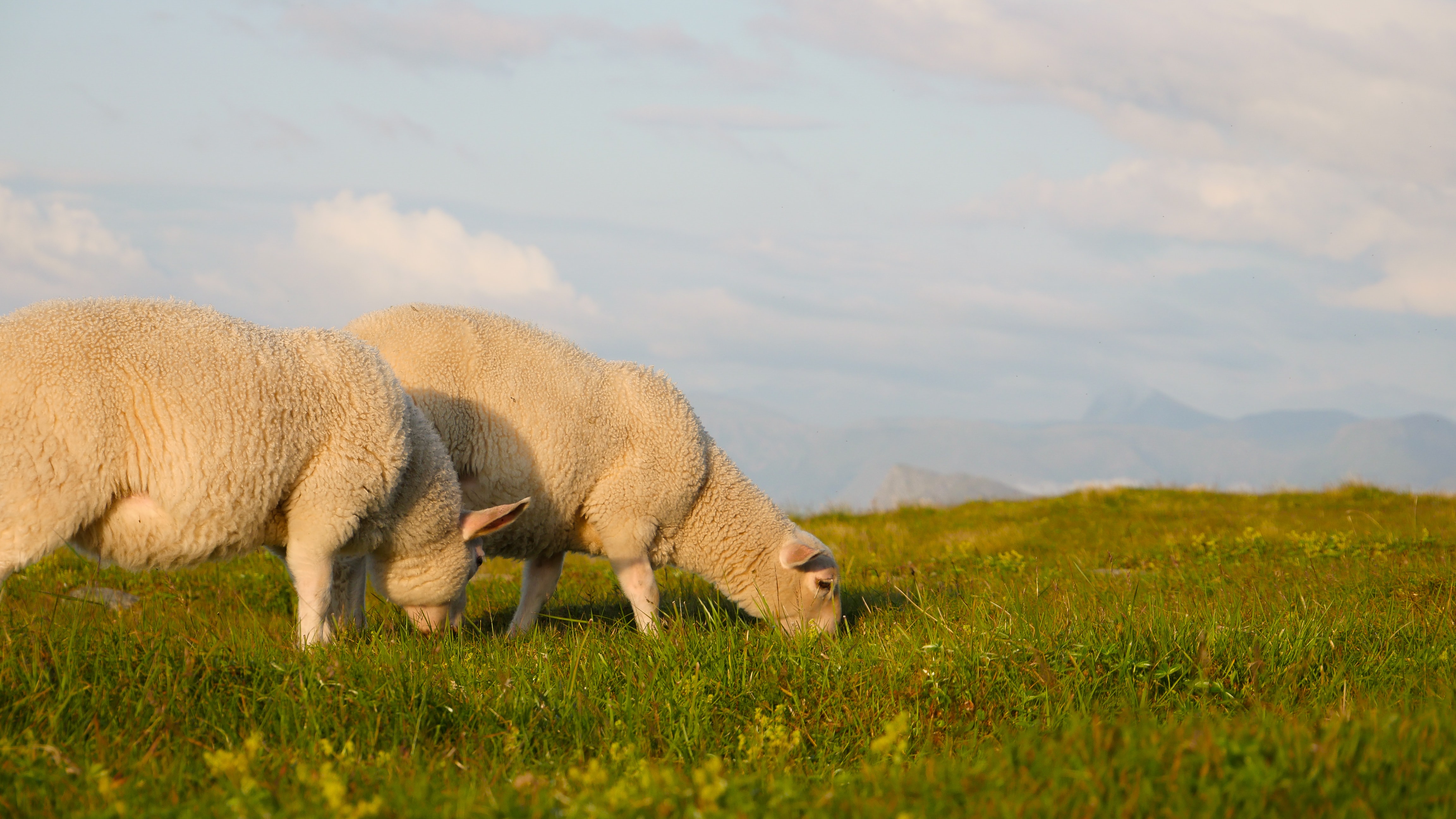
Some friends and I just began a study of Psalm 23. No matter how much time I spend in that chapter, I’m continually struck by the profound simplicity of the words. “The LORD is my shepherd; I shall not want” (Psalm 23:1). Throughout the Psalm, David expresses faith in the sufficiency of the Lord, recognizing all the ways that God cares for him. As we discussed the first verse the other night, we noted our great need and admitted the ways we fail to provide for ourselves. Apart from a shepherd, we would all be lost. But with a good shepherd, we have all we need. We rely on the Lord for provision, protection, and purpose, and he gives these lovingly.
I’m not good at resting in the Lord, but I serve a God who loves me and cares for me even when I struggle to trust him. So I pray for grace and mercy, I confess my weakness, and I look to Christ and his strength. And I hope in him, knowing that he will sustain me.


 as i learn to walk