My mind is all alarms sometimes, and I Wonder, worry, whether all is well, as I Misinterpret signs of life, sensing Danger. But you know just how to speak, to Move, to be, disarming faulty defenses with Laughter, comforting me with a gentle Touch of your hand.
Talent is a strange thing. And if you desire to steward your talent well for the service of God and his kingdom, your relationship with it may be a bit tricky.
First, it’s difficult to affirm your own talents without feeling like you’re being arrogant. Maybe that’s just me, but even the simple statement, “I have a talent for writing” feels weird to type. I immediately fear that someone will read these words and will assume I’m attempting to draw attention to myself or am trying to make a name for myself. I don’t ever want to be the guy who loves the sound of his own voice or who takes every opportunity to talk about the work he’s doing. In the attempt to avoid arrogance, I tend to swing the pendulum so far in the other direction that I end up in the opposite extreme of downplaying or downright ignoring what the Lord has given me to steward. But if the Lord has given you a talent, then I think he intends for you to use it, and that means accepting the reality that you are talented. I think part of using your gifts for the glory of God means embracing their existence, and that means having a healthy pride in the work you do.
Second, talent requires effort. While inspiration can, and does, foster times of excitement in the work, inspiration alone won’t sustain you in the work. This isn’t novel, as many others have pointed this out, but I’ve come to understand this more clearly through my own life and work. I used to write an essay and a poem just about every week. A wise man gave me some writing advice in the early days of my blog, and one of the pieces of advice that stuck with me was his encouragement to stick to a consistent schedule. As I kept a consistent writing schedule, I grew in a number of ways, and I saw the Lord use my work in the lives of others. Much good came from that discipline. But inspiration wasn’t always present. Sometimes it struck at the right place and time, and I enjoyed a period of writing under its influence. But sometimes the schedule simply called for the work to be done, and I had to write whether I felt inspired or not. And as I did, I found what others have found before me: inspiration often follows a disciplined effort. I believe the Lord used my work in that season in some neat ways. And while I’ve seen him at work in this present season, I’ve also felt led by him to do more than I’ve been doing. In this season, I don’t keep a writing schedule, so I’m not writing as much I used to. And I miss it. The act of writing is a spiritual discipline of sorts for me, so when I don’t write, I don’t just keep my talents from those I could be serving; I keep myself from a blessing as well. And effort is part of the process.
Third, your talent is more than just a hobby. I used to think of writing as a hobby: something I enjoy doing that may or may not be enjoyed by others. When I thought of it, I didn’t necessarily see it as anything more than a personal interest. But over time, I began to see that writing was a kind of ministry, perhaps one that the Lord had equipped me to do. So I started working at it, pursuing growth in the craft. And as I did, I saw how God used my work to bless others. I still struggle to accept this reality for myself (see my first point above), but I readily see it when I look at the talents of others. The songs and stories of Andrew Peterson, the music of The Arcadian Wild, the poetry of Gerard Manley Hopkins, the essays of C. S. Lewis, the tales of J. R. R. Tolkien — all of these have brought comfort, encouragement, joy, and wonder to my life. I have been helped by the talents of others, and I have seen the Lord use their works to minister to me. And while I don’t presume to place myself on the same level as these artists, I do recognize the opportunity to participate, in some smaller measure, in the same work, in using the talents God has given me to create things that he may then use in the lives of others. Your talent may not be only for you.
In a way, all of this boils down to one word: faithfulness. To be faithful with my talents means to see what God has enabled me to do and to affirm it as good. One podcast I listened to focused specifically on this idea, and for good reason (look up the Call It Good podcast by Matt Conner). I can’t steward well what I deny exists. But affirming one’s talent as a good thing is only step one. To be faithful with my talents means I must work at them. I must put in the time and effort required to hone my craft, to grow in my abilities, and to produce works that are good, beautiful, and true. Rather than waiting for inspiration to strike, I must strike first, in faith that God can bless my faithfulness regardless of whether I initially feel inspired in the act of creating. And finally, to be faithful with my talents means seeing them as gifts not just for me but for others. My writing is one way that I love the Lord my God with all my heart, soul, mind, and strength and love my neighbor as myself. This means I should be careful before I ignore my talent. Again, if God has given me something, I think he wants me to use it. And if that’s true, then I should probably be slow to stop working.
What about you? What talents do you possess? What has God given you to steward in this life? And what can you do with it this week?
Her loved one died a few years ago, and she feels like she’s gotten past the initial waves of grief. But at Christmas, she finds it hard to hold back tears.
His situation isn’t comfortable, but he seems to have accepted that. He understands he can’t force change, and he’s decided to wait for the Lord. But during the holiday season, he struggles a bit more than usual to be okay with the way things are.
They’ve prayed for children, and they long to be parents, but they remain a family of two. They understand the Lord is good. They don’t question that truth. But when the weather starts to change and the lights and decorations begin to go up around the town, they feel the ache grow a little stronger.
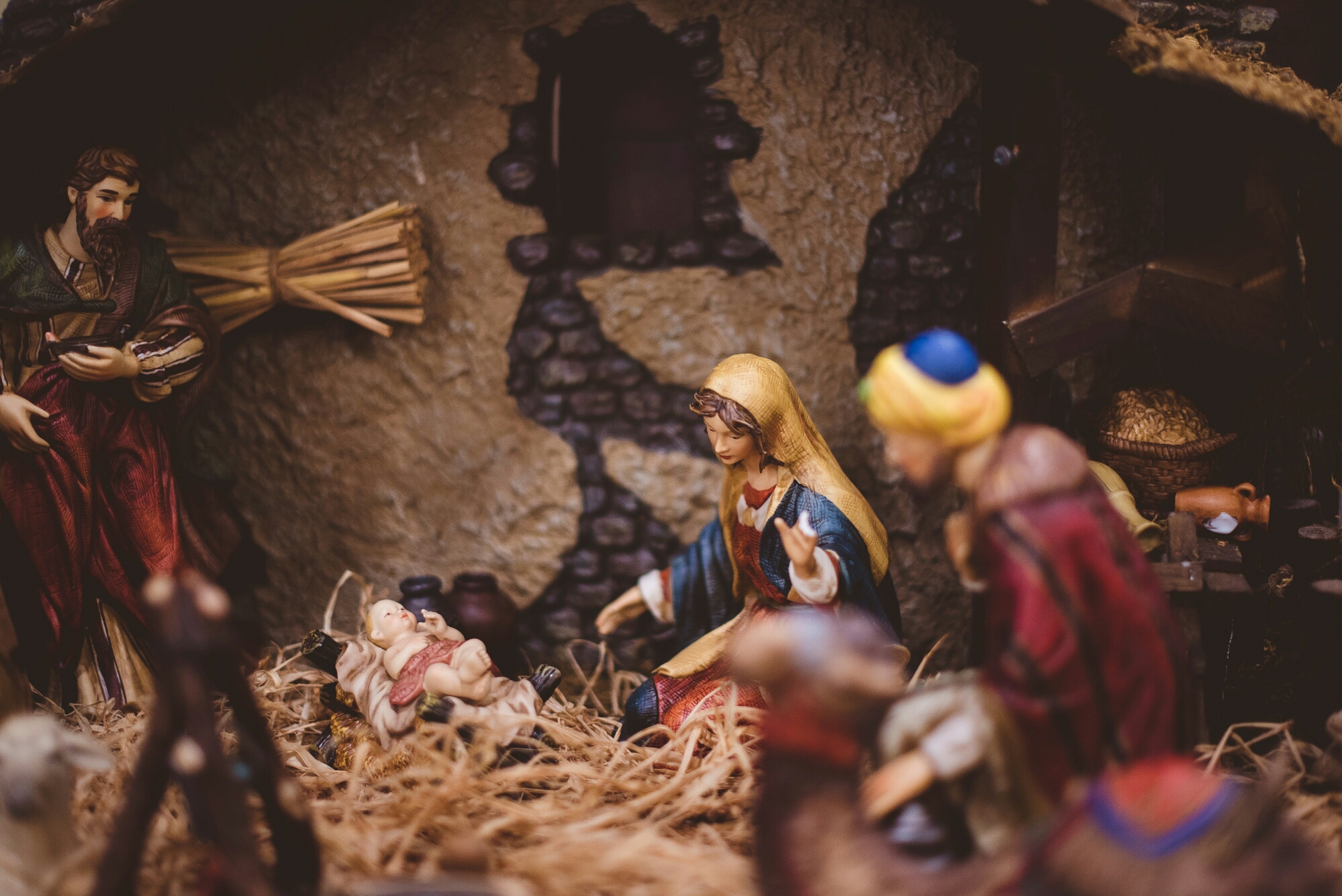
Christmas is a source of great joy. From the generosity of friends and family to the warmth of love all around, we have much to rejoice in during the holiday season. We’re reminded of Jesus’s birth, of God’s gift of love for a lost world, and we revel in the hope we have through him. Despite the darkness and despair of the rest of the year, Christmas comes as a deep breath, a welcome rest, a warm reminder that light always endures.
Why, then, can this season also make us sad?
In part, I think it’s because of the perspective this season brings. We see in Christmas a bit of the way things ought to be. Peace on earth and good will among men (Luke 2:14) is glimpsed at Christmas, even in a world that remains far from the King. And when we see more clearly how things ought to be, we see more clearly and feel more deeply the way things are now broken. We feel loss a bit more acutely, longing for the fellowship we can no longer access. We struggle with deferred hopes, the sting of present sorrows sinking a bit deeper into our souls. We know the world is broken, and we grieve.
But the sadness of this season is really more bittersweet, for sorrow doesn’t get the final word. We’re reminded of our loss and grief at Christmas, but we’re reminded too of the way God is making all things new. Because of Jesus, everything has changed. Sorrow turns to joy, suffering turns to growth, loss is turned to gain, and confusion is swallowed up in a greater certainty. Pain and hardship are real, but they exist as parts of a larger story, one which makes sense of them and redeems them. Christmas affirms the darkness of the night and promises a bright and fast-approaching dawn.
It isn’t wrong to mourn when we feel sad this season. The absences we feel are real and meaningful. This broken world is a painful world. But we can also rejoice with a joy that runs far deeper than any despair, a love that runs far deeper than any heartbreak, and a hope that runs far deeper than any sorrow. Christmas reminds us that the sad things are temporary things. We ache now because things are not the way they should be, but we are approaching a day when all will be well. So grieve and rejoice. Feel deeply the loss as well as the love. And look to the one whose birth brought hope for all hurting hearts.
Six guys from college have kept in touch consistently over the last number of years. Cade, Dustin, Jeff, Kevin, Will, and myself have shared encouragement, accountability, and laughs through seasons of difficulty as well as seasons of joy. Last year, they challenged me to write a blog post or a poem on any subject of their choosing for each of their birthdays. This year, they collaborated on a poem for mine. I suggested they write about the brotherhood of believers, using our group as an example, and I’m excited to share their work with you below.
Thanks, guys!
Isolation. Sequestration. No man was meant for the hermit’s Operation
Accountability. Brotherhood. How some men will stand the opposition of wormwood
Emotionless. Stoic. No man was meant for the pure role of heroic.
Scripture. Games. Binded by the Lamb’s blood running through our veins.
Gandalf. The Doctor. A fan of these, as well as soccer. Jaime Vardy. Leicester City. Go hand in hand like Joe and witty. Friend. Brother. A man like Joe, there could never be another.
How then must these truths be taken? None other than creating mancation!
A dream to most We created a weekend of chaos, I must boast
But in the Cross that is For it is no credit of our own, this work is simply His.
The game playing, coffee drinking and steak eating will fade.
But this brotherhood is fraternal. It cannot be broken, for this bond is eternal.
At the word of the Maker, the earth
Is brought forth to revolve round the sun
To the praise and the glory of one
Who possesses an infinite worth.
He shines forth from perfection’s high’st form,
From great Zion, with sounds of a choir.
Ev’ry step is preceded by fire;
When he walks, he is shrouded in storm.
His salvation is given, not bought,
For he owns all that we could present.
Sacrifices for vices are spent,
Yet they profit the Almighty naught.
So walk not in the pathways of death.
Ponder life ‘fore your lips claim his pow’r.
Let the fear of the Lord fill each hour,
And let thanksgiving fill ev’ry breath.
I love Christmas. I love the chilly weather outside, the lights strung throughout the trees in the park, and the sounds of Christmas music everywhere. I love the warm feeling that accompanies giving gifts to loved ones, and I even love facing the crowds to get those last minute gifts. Christmas, for these reasons and more, is arguably my favorite time of the year. Continue reading →
Grace beyond what sinful men deserve
Grace that moves this salvaged soul to serve
Grace that opens eyes to truly see
Grace that works in love to pardon me
Grace that guides my steps toward the goal
Grace that takes the wreck and makes it whole
Grace that reaches further than my sin
Grace that opens fellowship again
Grace that knows the longings of the heart
Grace that causes hearts of stone to start
Grace that this, my life, is not a loss
Grace that gave his life upon a cross





 as i learn to walk