For years, I wrote of learning how to walk, Of following the Master of the waves, Of choosing to obey instead of balk, Of trusting in the God who loves and saves. But I misdiagnosed anxiety, Embracing fear as if it was the Lord. I was a slave to scrupulosity. My death was unto him but was untoward. But light was shining though I could not see, And love was better than I ever dreamed. In time, he led me through and set me free, And all that I had broken he redeemed. I lost my hold but still was held by grace. Through suffering, I better learned his face.
My mind disfigured your face in my mind, Painted piercing eyes, uncompassionate, Shaming, in place of those you said I’d find. My view of you and you were disparate Persons, known too well and not well enough. “You” imposed a self-imposed prison cell, Held hopeless standards, always called my bluff. I was always guilty, not free, unwell. Thus I assumed from this false gospel, lie Of law’s freedom. Truth is not so broken. You are love. Your yoke brings rest, peace, a sigh Of relief, rooted in words you’ve spoken: “I have overcome the world.” Now I see Your overcoming work extends to me.
When I look back, I do not see successes. At least, I do not see them easily. Instead, I see a mind that second-guesses And find that failure fits more feasibly. When I look back, I do not see your mercies, Or seeing them, still feel they are not true. All good seems covered up in controversies, In all the ways I failed and still fail you. When I look back, I see the circumstances That roll like waves across a wind-swept sea. I do not see the Son, the second-chances, The grace that still abounds for those like me. When I look back, I must distrust the lies That claim truth is determined by my eyes.
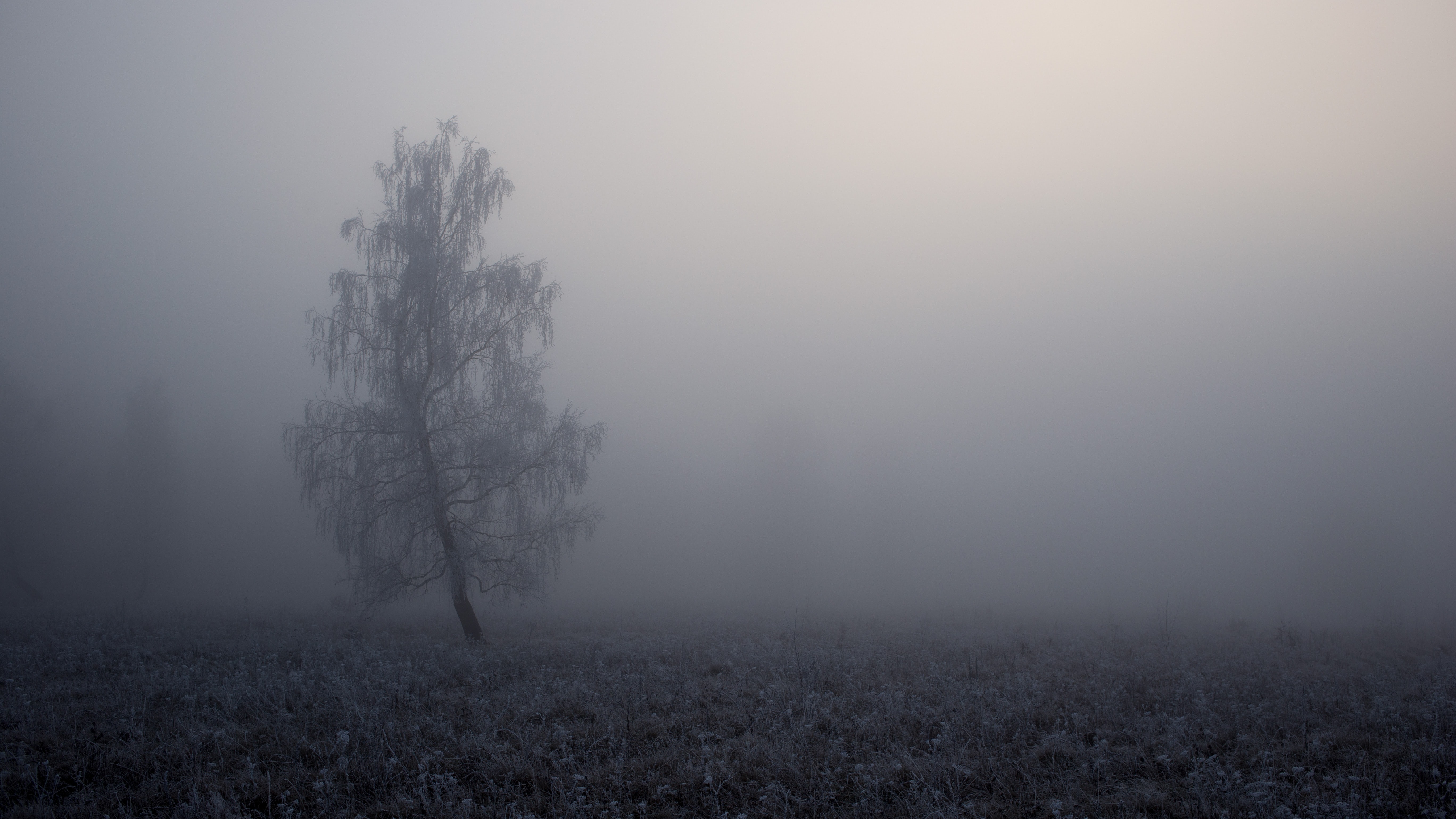
Fear sometimes settles on you like a fog. You feel it all around you, it’s presence chilling and uncomfortable. It obscures your sight, preventing you from seeing the way forward. You know the world around you still exists, that reality is bigger than what you can presently perceive. You know that the fog will eventually lift.
But sometimes it doesn’t.
Or, at least, it doesn’t lift as soon as you’d like. That’s when you start to panic and despair.
It sounds silly, but fear can make you suddenly less certain of what you know to be true. God’s love and his faithfulness, his mercy and his grace, his purposes in discipline and the profit in the testing of our faith—suddenly, these subjects seem strangely foreign. You know the Scriptures. You’ve sung the songs, heard the sermons, read the books. But in the middle of the fog, as fear clouds your ability to think clearly, truth doesn’t appear to come to your mind or heart as quickly or as easily as it once did.
And yet, even when fear feels pervasive and overwhelming, what is true is still true. Though our perceptions may make recognition of truth more difficult, reality has not fundamentally changed. God is still on his throne. The light still shines in the darkness and the darkness still has not overcome it. The Lord’s love remains undiminished, his purposes unhindered. If God really causes all things to work together for good, then he’s still working, even in the fiercest seasons of fear. In spite of how we may feel, he has neither forgotten nor forsaken his children.
It isn’t easy to hold on to truth in the midst of fear. Thankfully, the Lord remains a firm foundation for feeble souls. Fear can reveal our weakness; his power is still made perfect in weakness. So we trust in him though we don’t feel okay, hope in him though things seem hopeless, and keep following him though we don’t know the way. And as we do these things, we will find him faithful, as he has always been and always will be.
We are a people prone to adulation
Who often are audacious with our praise.
Provoking conflagration, we
Resist all abrogation. See!
The idols are the masters of our days.
Such worship is a devastating blaze.
Idolatry is no anachronism;
All ages suffer its asperity.
Discern the serpent’s schism. See
The apposite baptism. We
Reject apocryphal authority
And trade acerbic lies for clarity.
The master of deception posed a question:
“How best can I befuddle Adam’s race?”
He chose to replicate God’s holy bastion
With subtle changes only few would trace.
He called the son of God a moral teacher
Whose lessons help us all live better lives.
The serpent thus can sabotage a preacher
And turn a church into a teeming hive
Of people bent on earning their salvation
By feeble works of their polluted hands.
Grace is avoided by the “able” nation
As death under the law engulfs all lands.
Or else the serpent says the Christ will save us
From any consequences from our sins.
Asserting this, the serpent can enslave us
To think that pain-free living now begins.
He whispers that if difficulty tarries,
We must not be believing well enough.
He in this way ensures the Christian carries
A heart of fear or a self-righteous bluff.
So listen well, my fellows, to the Scriptures
And flee the lying words which tempt the ear,
For catchy lines, which make for pretty pictures,
Are laced with hooks to kill, so learn to fear
All forms of “almost truth,” and seek the certain.
Be on your guard no matter where you trod.
Trust in the Spirit, see beyond the curtain,
And walk in wisdom by the truth of God.
There is a depth of darkness that, when found,
Appears to the observer to be light,
A light so strange, so buried, yet so bright:
Illumination hidden in the ground.
The world to this observer all around
Appears as filtered through his altered sight,
Assures that he alone is in the right.
In time, his voice will be to him the sound
Of truth amidst a mass of ignorance.
His earth will seem to him a world of slaves
In need of him, the savior of mankind.
In truth, the darkness robbed him of his sense.
He cannot tell he walks among the graves
Of others who, like him, have been made blind.








 as i learn to walk