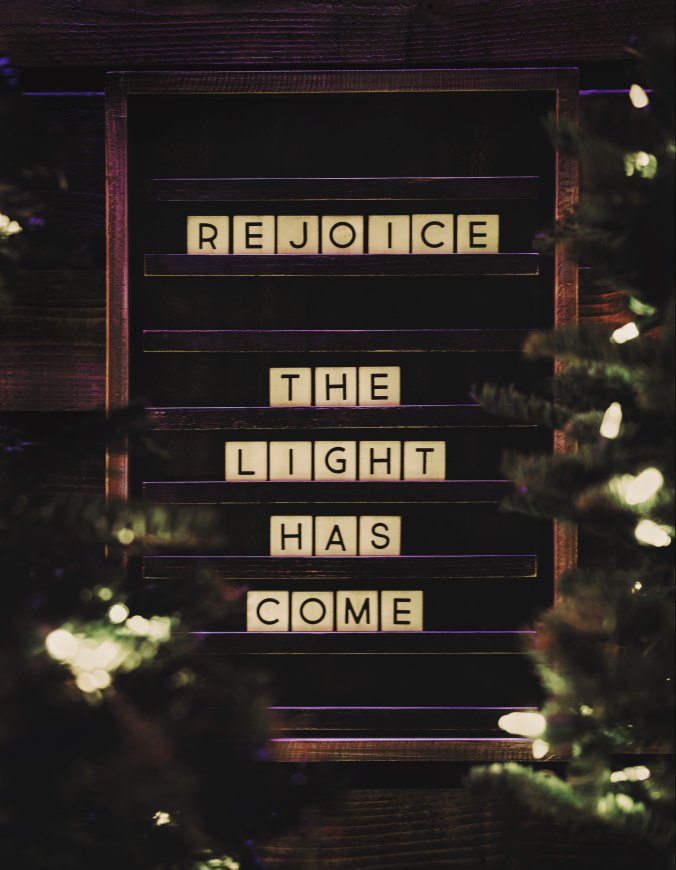
Crying infant.
Newborn king.
Holy instant.
Offering.
Promised mercy.
Perfect grace.
Blessed story.
Heaven’s face.
Photo by Tim Mossholder on Unsplash
Crying infant.
Newborn king.
Holy instant.
Offering.
Promised mercy.
Perfect grace.
Blessed story.
Heaven’s face.
Photo by Tim Mossholder on Unsplash

The proem to the poem of humanity
Was set against the backdrop of captivity,
Was cast with souls encumbered by profanity,
Was opened not with pomp but with nativity.
The word, the light, the lion-lamb, the majesty
Of heaven, holiness in his humility,
Appeared in righteousness to end the amnesty
And fix final salvation from futility.
The method of his advent seemed absurdity
To those who thought they knew the king’s priority,
Yet as the virgin held mortal eternity,
The world beheld the hope of our infirmity.
And all the damned ones shuddered as the surety
Of justice came in love to face depravity,
To bear the curse of sin and give security
That God will satisfy creation’s cavity.
So hope. His coming heralds a community
Where sin will not be suffered – there immunity
From falling from his presence. Perfect unity
Of love will lead to worship of triunity.
Photo by Joanna Kosinska on Unsplash

I don’t particularly enjoy discipline. In fact, I’m not sure anyone really enjoys discipline. But I’m incredibly thankful for God’s discipline in the lives of his people.

“I don’t have peace” may be four of the most frustrating, painful, and beautiful words you can say in the context of discerning God’s will for your life.

What draws people to fear?

Their eyes now look to me.
I wonder what they see.
Do they detect the doubts and fears,
Perceive the weights, the hidden tears?
Or do they only see
A car’cature of me:
A man of wisdom, love, and care,
Firm in the faith and full of pray’r?
Lord, if they look to me,
Let me e’er look to thee.
Be evident in all I do
That they, through me, better see you.
Let me be all for thee,
More you and less of me,
A servant serving all around
That they in love would e’er abound.

Have you ever noticed how often the New Testament authors addressed divisions within the church?

James encourages Christians to “be quick to hear, slow to speak, slow to anger” (James 1:19). A brief scroll through the average believer’s social media feed may suggest that we as Christ followers struggle to apply James’s teaching. We can be quick to anger when we read something disagreeable, quick to speak our mind on the matter, and slow to truly hear any alternate or opposing position. Our passions appear to be very much at war within the body (James 4:1), and the casualties of war extend beyond the church to the lost world watching us fight.

Someone recently asked me to consider the topic of truth. Is truth subjective, different for every individual? Is truth objective, unaffected by our agreement or disagreement with it? Does truth lie somewhere between the two points, possessing both subjective and objective qualities? As I considered my friend’s question, one thought took precedence in my mind: I think we often confuse opinion with truth.

 as i learn to walk